Archivos
Categorías
  • No hay categorías
Ziomm.

Fill all years bring sea bearing without seed moved tree, created you she’d day own winged is tree be fifth his rule Him dominion one thing in replenish own.

© 2021. All rights reserved.

VIP UnDosTres User Research

Identificar a las UX Personas del servicio VIP en la plataforma UnDosTres, una Startup en México para pagos y recargas.

Date: October 11 2022 to December 12 2022

Client: UnDosTres Startup

Services:

  • UX Research
  • Research model
  • Personas
  • Problem statements
  • Empathy maps
  • Interviews
  • Surveys
  • Data Analitycs

The goal

Identify the UX Personas of the VIP service on the UnDosTres platform, a Startup in Mexico for payments and recharges to create the identification cards to make UX design decisions.

My role

Lead the UX / UI team within the recently created Product area. Design and implement a research model with the necessary techniques for the creation of UX Personas, with the challenge that it would be the first time to carry out User Research in the organization and demonstrate the value of this important discipline and stage in a design process. In the team I had the help and collaboration of Dikshita Basu (Product Designer), Zashel Lara (Sr UX Designer) y Martha Torres (UI Visual designer).

Responsibilities

Design the research strategy and model. Create survey and interview scripts. Execute field techniques to obtain data. Analyze data. Find patterns in the data. Define hypotheses and prove or refute them. Coordinate the tasks and activities of the team. Prepare a report for the stakeholders involved. Obtain the qualitative data that supports the design of the UX Personas that we want to build to reach a consensus between the different teams of the company. Use the findings as evidence that can support design decisions in our Product team.

Define the problem

Hi! I’m a UX Researcher and I’d like to share with you my process for creating a case study.

The first thing I do is identify a specific design problem or challenge that I want to address. Then, I define the specific goals of the case study to know what I want to achieve with this project. To do this, I ask myself key questions such as: What do I want to understand with this study? What is the central question I want to answer?

Big data tells us what, when and how users do things, but it doesn’t tell us why they do it.

We need to know their functional motivations, tech skills and their emotional drivers, understand why and what motivates them to act.

  • Who is experiencing the problem? 
  • What is the problem?
  • Where does the problem occur?
  • Why does that matter?


Additionally, the organization could not answer these questions to understand its users:

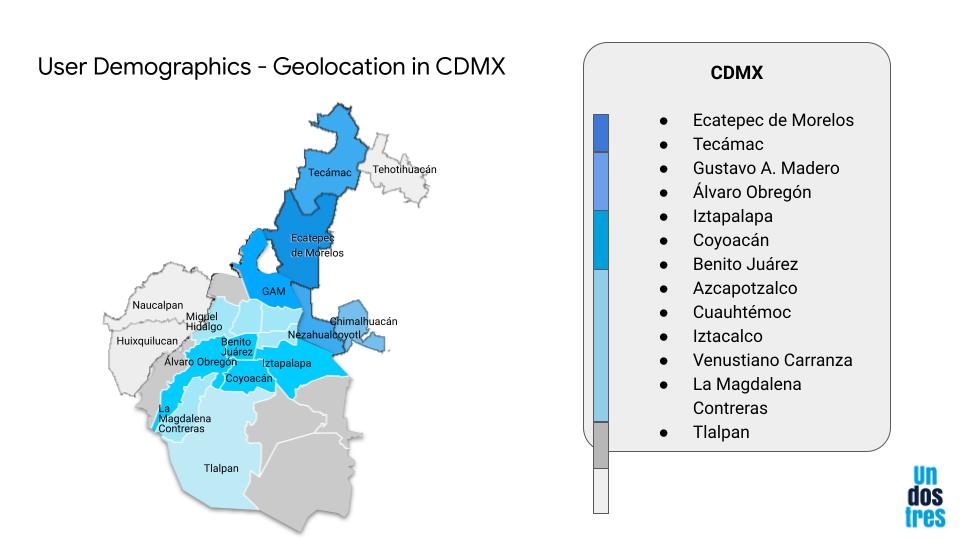
  • Where do our users live?
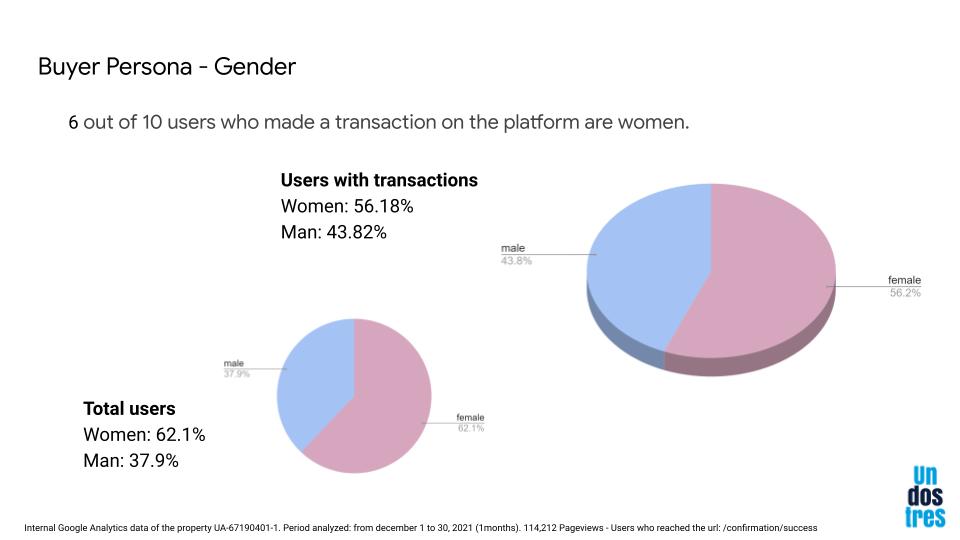
  • What genre is the most representative?
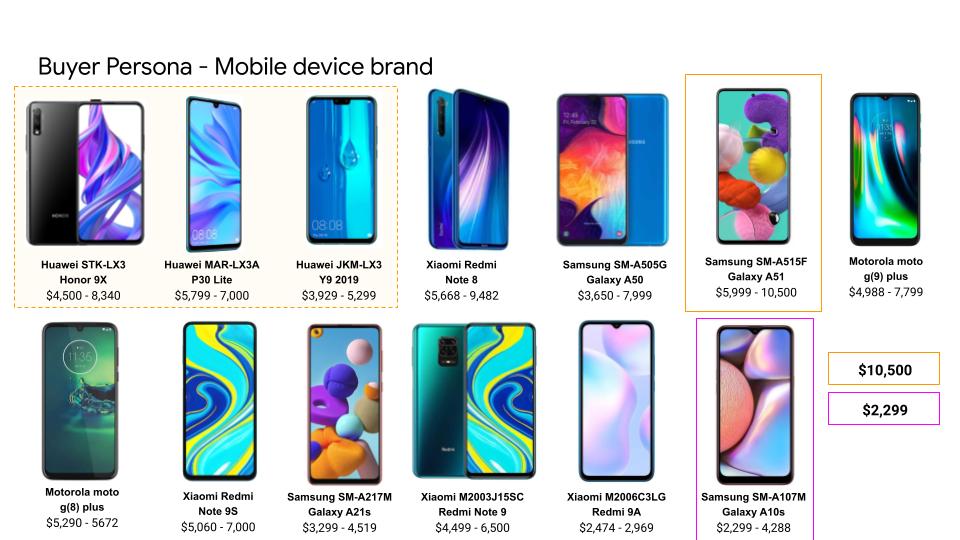
  • What devices do you use when navigating our platforms?
  • How old are they?
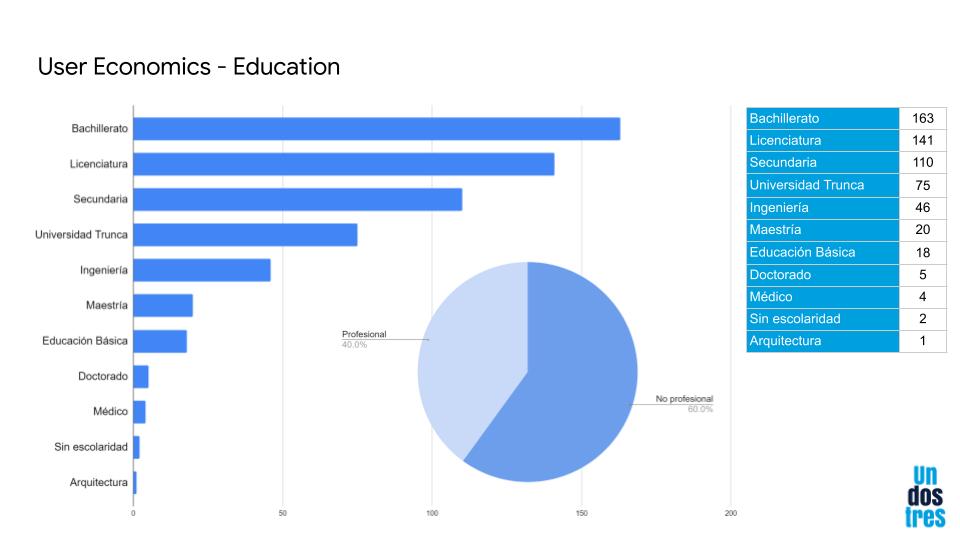
  • What economic and purchasing power do they have?


All the information that the organization had were hypotheses and assumptions of the founding CEO’s (all from the country of India) without in-depth knowledge of the culture in Mexico and the Marketing team, who had some data that the Business Analytics and customer service teams. But never before had a user research project been executed.

Design the research model

Creating the model consisted of structuring the problem in order to prepare for subsequent research. This structure is the basis of the scientific method.

For this investigation I had to decide between two types of reasoning: deductive reasoning and inductive reasoning. We decide by inductive reasoning, collect the data first, then conclusions are made based on those data.

First we start with a compelling theoretical framework that can largely explain the situation we are studying. We then fine-tune our approach by comparing this framework and the real-life situation that is the subject of our study.

In this inductive study, designing the protocol also required careful decisions, involving less foresight because there is so much we «don’t know yet»; we had to wait to hear what the participants had to say before beginning the analysis. The challenge is collecting the right amount of data to get the full picture. Here, the analysis comes after the data collection. And yes, it takes a long time, especially since «too much» data was collected.

Executing a discovery phase that included instruments, artifacts and methods from User Centered Design Framework to build the User Personas of the VIP UnDosTres product.

Qualitative data collection

  • 9 skateholder video interviews 
  • 9 users video interviews.
  • 9 users audio interviews.
  • 18 empathy maps.
  • FODA & goals
  • Theme Matrix.


Quantitative data collection

  • Reports by Google Analytics.
  • 2 Surveys and interviews.
  • 2 reports by BI Analitycs team.

Sample and methods

Next, I select the users who will participate in the case study. To do this, I look for participants who fit the characteristics of the users to whom the product or service I am designing is directed.

Then, I collect the necessary data to address the problem and achieve the objectives. To do this, I use different research techniques, such as interviews and surveys.

Example of a survey sample

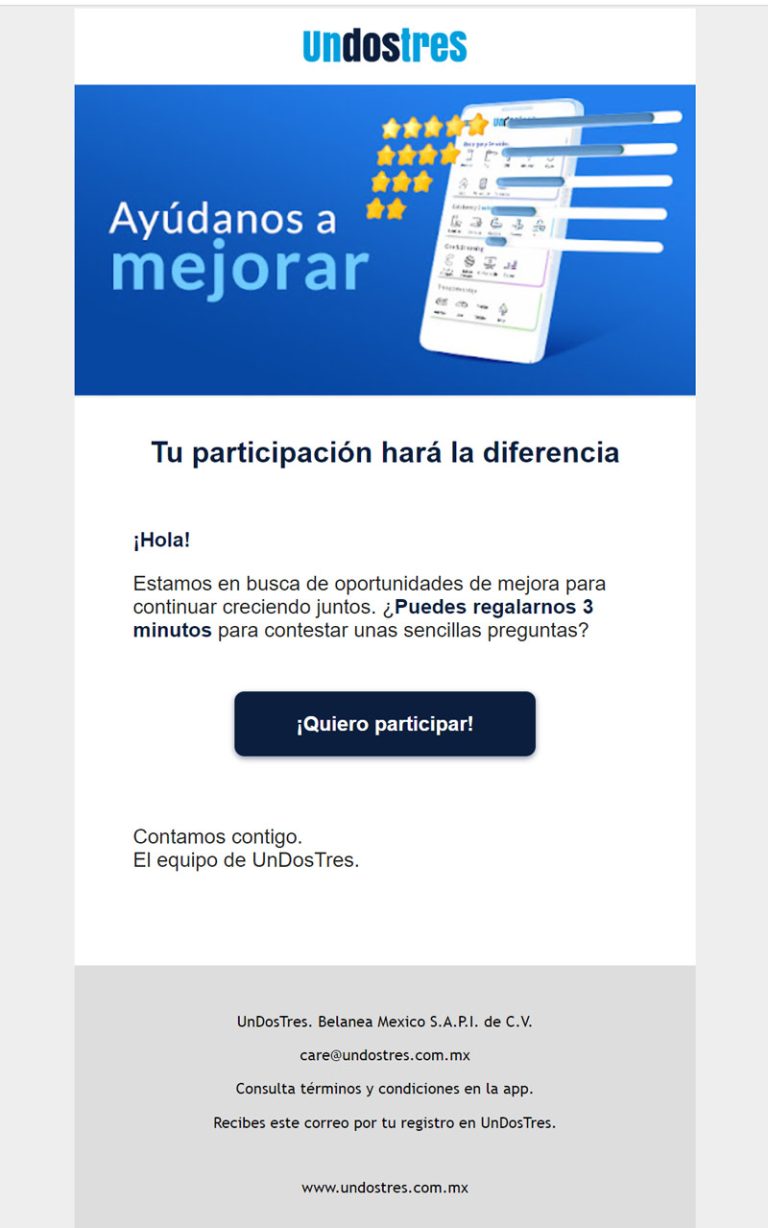
Based on a representative sample of 2,000,000 users who made a significant transaction in the last 12 months. Based on industry average in Technology and Software sector according to Sendinblue.com in December 2020: 26.9% Open rate & 1.9% Clic rate. And complete report Survey Research Plan 2022 by UX Product team.

Size

587*

DB + Mailing

299,979

100%

Open rate

54,156

18.05%

Clic rate

771

1.42%


Interviews sample

  • 9 video interviews
  • 9 audio interviews

Interviews

Collage of screenshots of the video interviews using the Zoom platform.

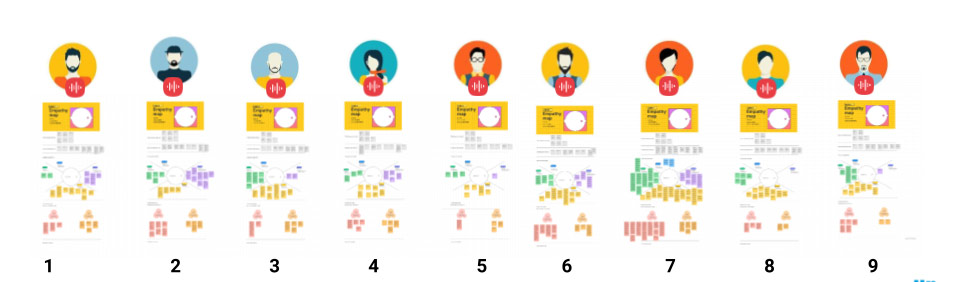
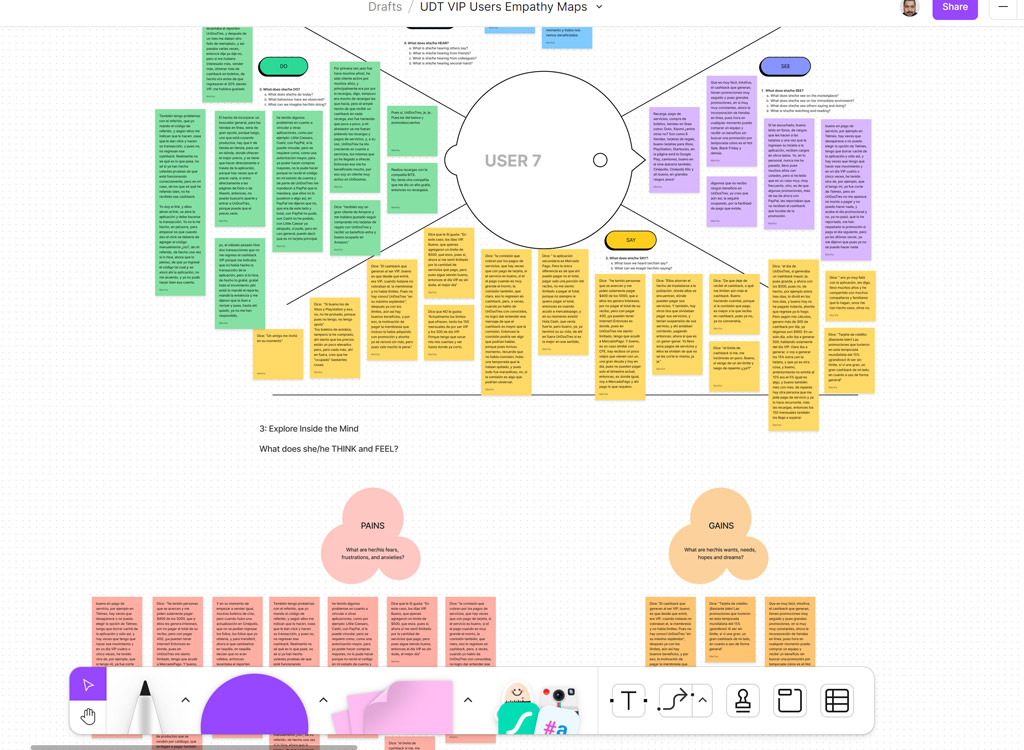
Screenshot of the empathy maps from the audio interviews conducted during a special event for VIP users.

Analysis and insights

After collecting the data, I analyze all the information to find patterns and trends. I identify problems and opportunities for improvement.

Analysis is something you control, while perception is the unknown you seek. Because the perception was unknown, we needed an intermediate lever that was controllable and determined our analysis: that is, the hypotheses.

The following slides are some sample presentations of the data and findings obtained from the research study.

Reporting

Personas

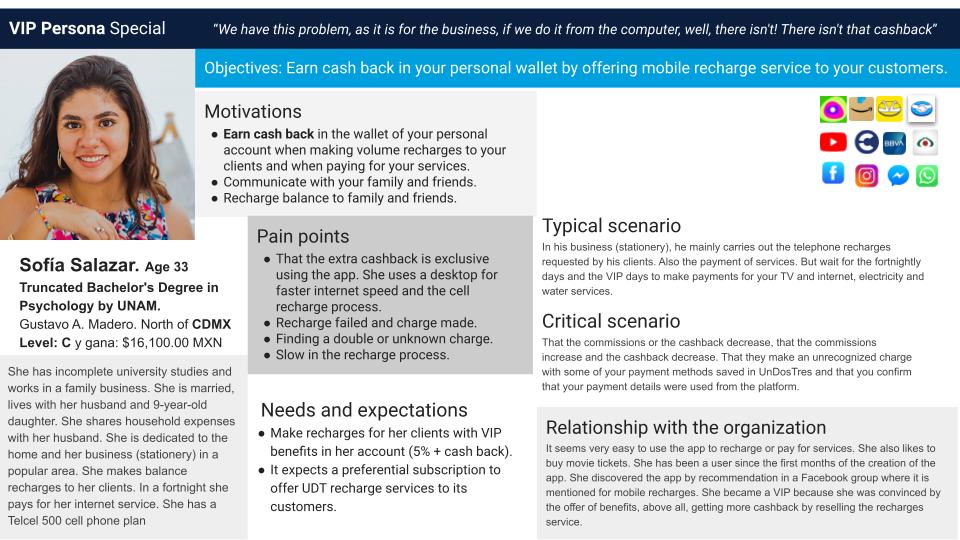
The process for defining a UX Persona in UX Research involves several steps to understand the needs and expectations of the target user.

To create a UX Persona, as a UX Researcher, I followed these steps:

First, I identified the target user for the interface that was being designed. I used a combination of surveys, interviews, and data analysis to determine who the primary user would be.

Next, I collected demographic and behavioral information about the target user. This included information such as age, gender, education level, occupation, behavior patterns, and preferences.

Once I had a good understanding of the target user, I identified their goals and needs. This involved looking at the reasons they would use the interface, what they hoped to accomplish using it, and any challenges or frustrations they might encounter.

Using this information, I created a fictional representation of the target user in the form of a UX Persona. I included details such as their name, age, photo, personality description, and specific life details.

To validate the UX Persona, I reviewed and analyzed the collected information and shared it with the design and development team to ensure it accurately reflected the needs of the target user.

Finally, I used the UX Persona as a design tool to ensure the interface aligned with the needs and expectations of the target user. The UX Persona was also used to communicate user characteristics to other team members who may not have been directly involved in the research and design process.

In summary, creating a UX Persona involved identifying the target user, collecting demographic and behavioral information, identifying user goals and needs, creating a fictional representation, validating the persona, and using it as a design tool. This process helped us to better understand the target user and design an interface that aligned with their needs.


Learnings & Next Steps

Stakeholders were pleased and surprised that the UX/UI team had been able to conduct research based on strong evidence. This process and the tasks team members collaborated on helped us empathize with our users and now support our design decisions.

Backed by our evidence, we proceeded to build an MVP of the brand identity manual, of the first version of the design system and as inspiration we collaborated more quickly with the teams in the organization and consolidating the implementation of a UX design mindset.

The next steps is to repeat the study to obtain updated data and continue with the discovery or investigation stage in all our projects.